Know The Fire Danger Ratings They Could Save Your Life
Australia’s fire danger rating system has been improved and simplified to make it easier for you to make decisions to stay safe on days of fire danger risk.
Across the country, fire and emergency services are applying nationally consistent colours, signs and terminology. This means that wherever you go in Australia, and whatever the season or bushfire fuels you’re surrounded by, you can understand the level of threat and what you need to do to stay safe.
Know The Fire Danger Ratings
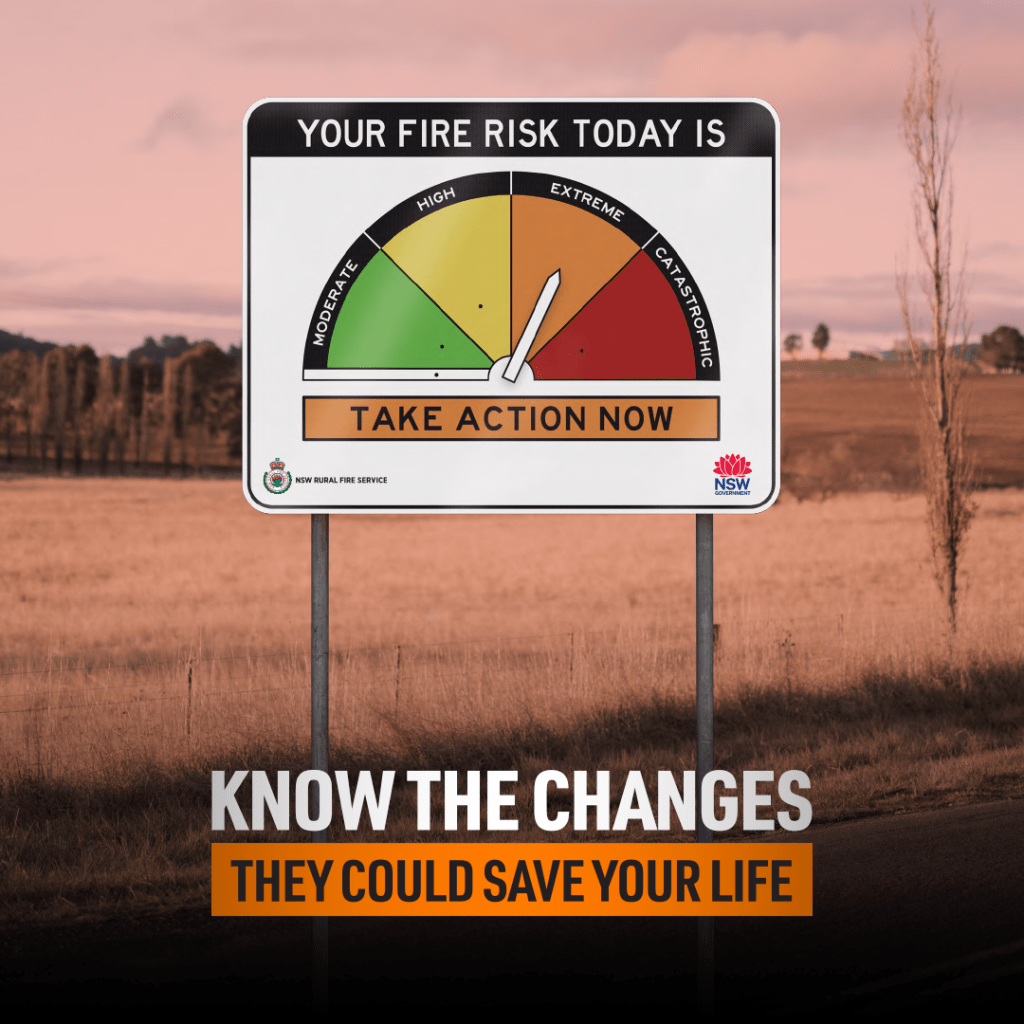
The move to a simpler system is informed by extensive community consultation and backed by improvements in science, which will mean we can better predict areas of greater risk on days of fire danger.
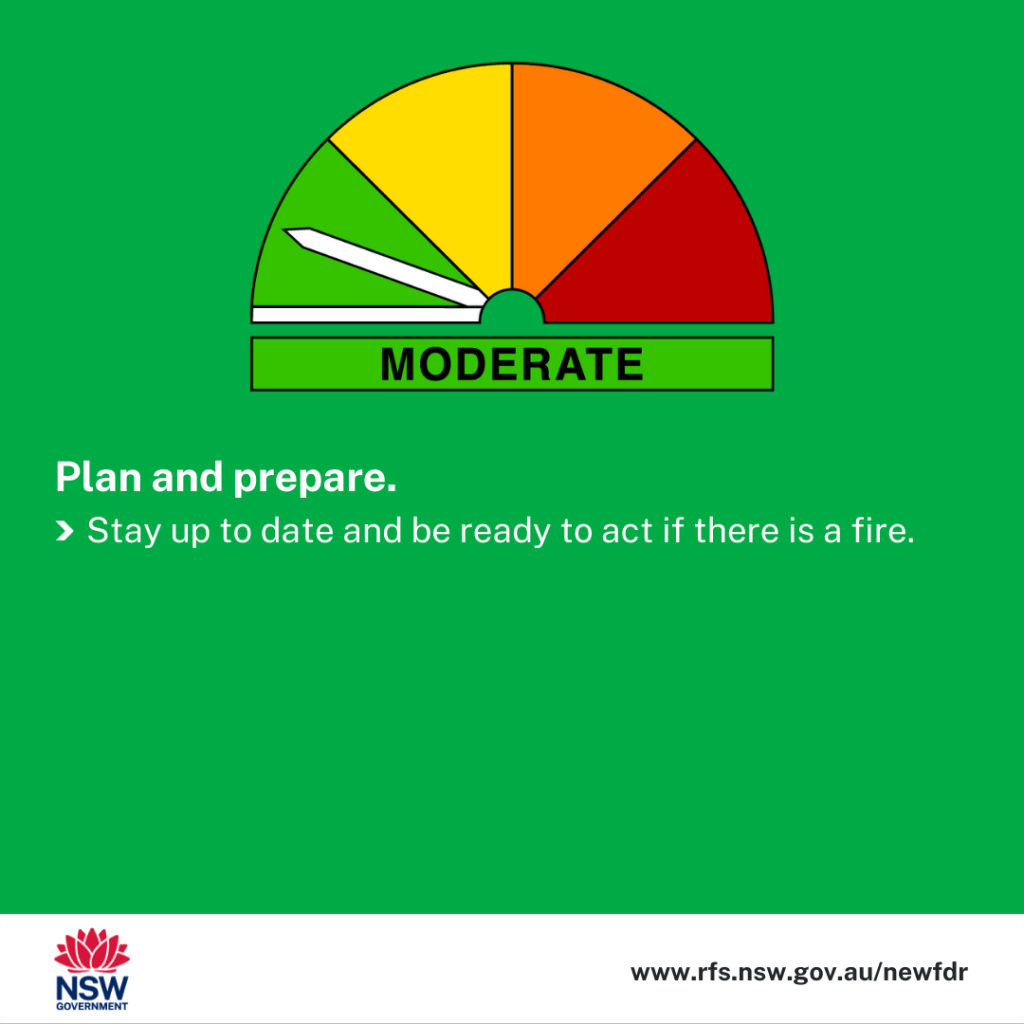
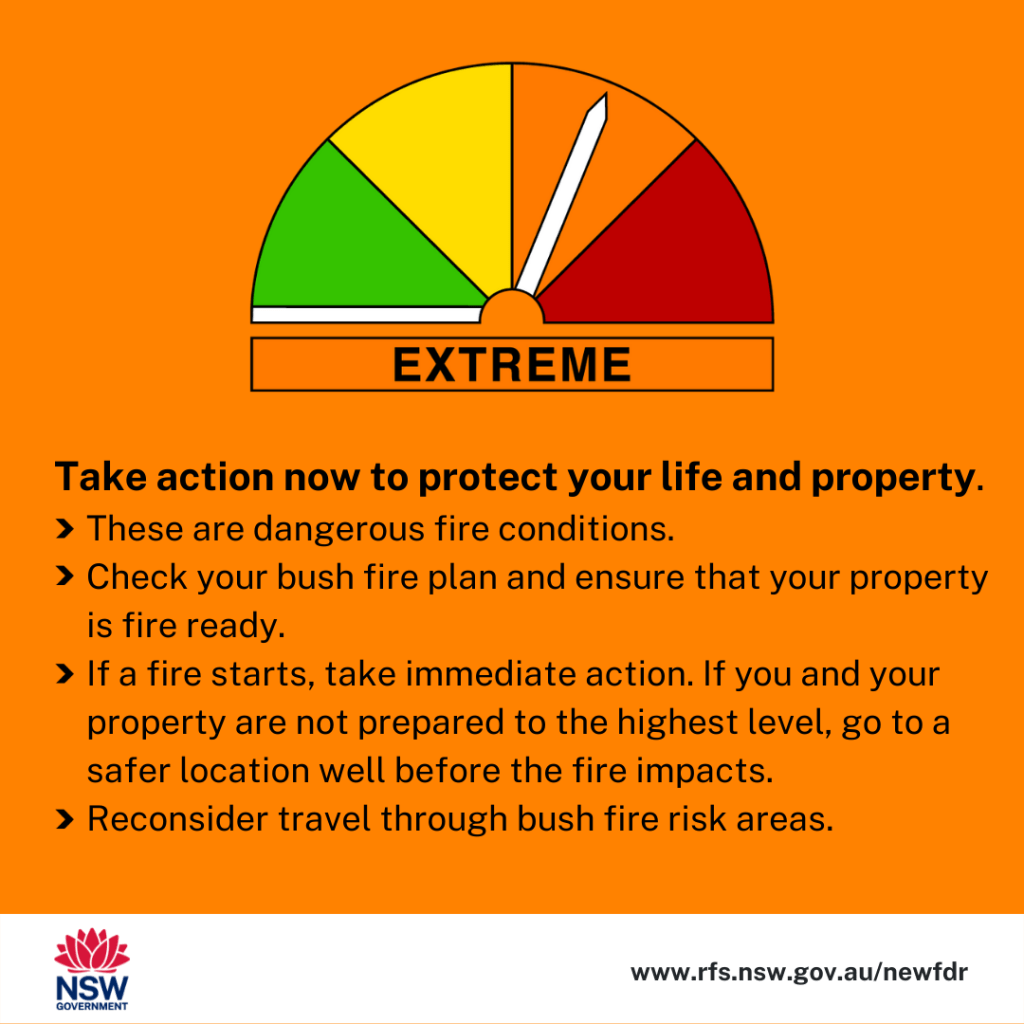
The Australian Fire Danger Rating System uses four easy to recognise rating levels, each with a message to encourage you to take action to protect yourself and others in the face of bushfire risk.
The fire danger rating levels are:
- Moderate: Plan and prepare
- High: Prepare to act
- Extreme: Take action now to protect your life and property.
- Catastrophic: For your survival, leave bush fire risk areas.
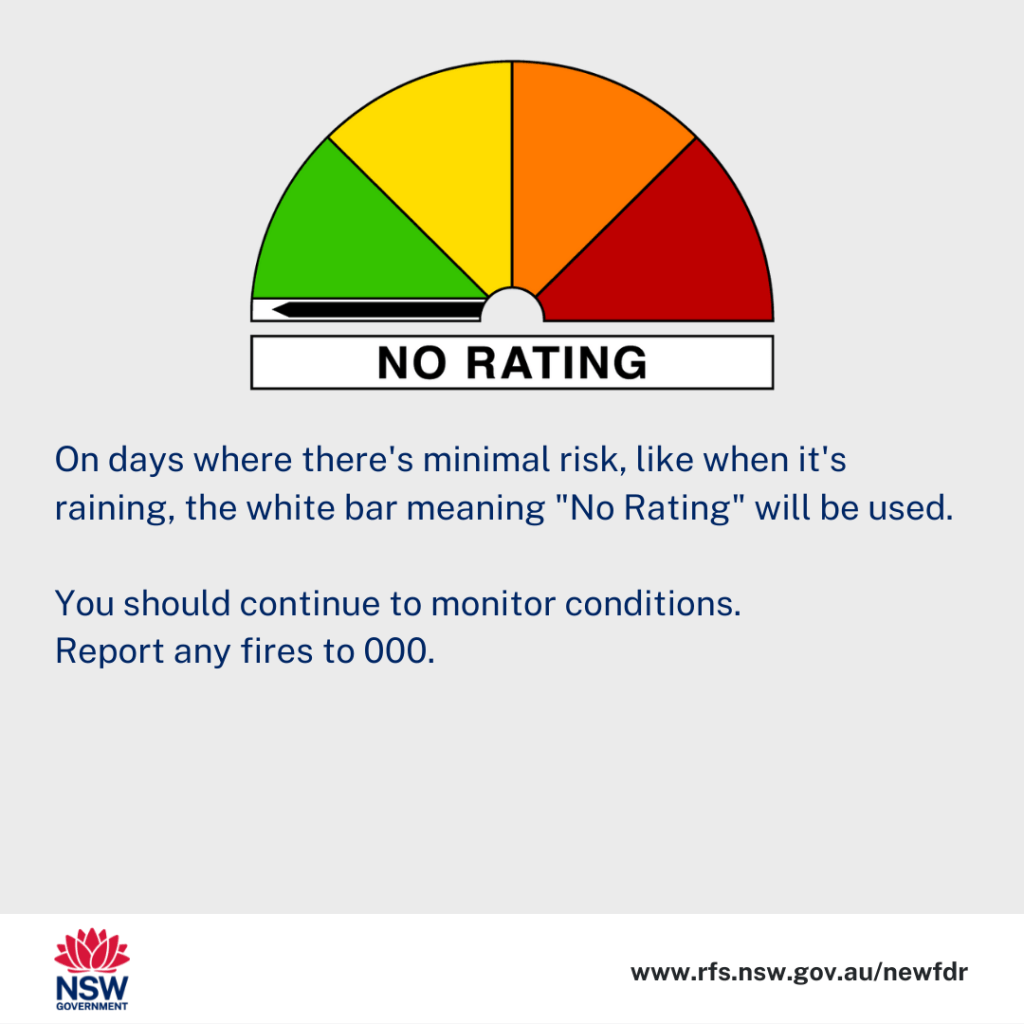
The white bar under Moderate indicates No Rating for days where no proactive action is required by a community. This does not mean that fires cannot happen, but that any fires that start are not likely to move or act in a way that threatens the safety of the community.


More Information
Fire danger information may be broadcast on television, radio and printed in newspapers.
Or you may see the current fire danger rating level on roadside signs, on social media, in apps or websites.
These are good prompts for you to seek more information from your state or territory’s fire and emergency services portal.
To contact your local brigade:
Email: secretary@lakesland.rfsa.org.au
Lakesland Rural Fire Brigade
Views expressed on this website do not necessarily represent those of the NSW Rural Fire Service.
During an emergency, do not rely on information placed on this site, please reference the NSW RFS website at www.rfs.nsw.gov.au, or call 1800 NSW RFS for emergency information. This site is not monitored 24/7.
 Lakesland Rural Fire Brigade